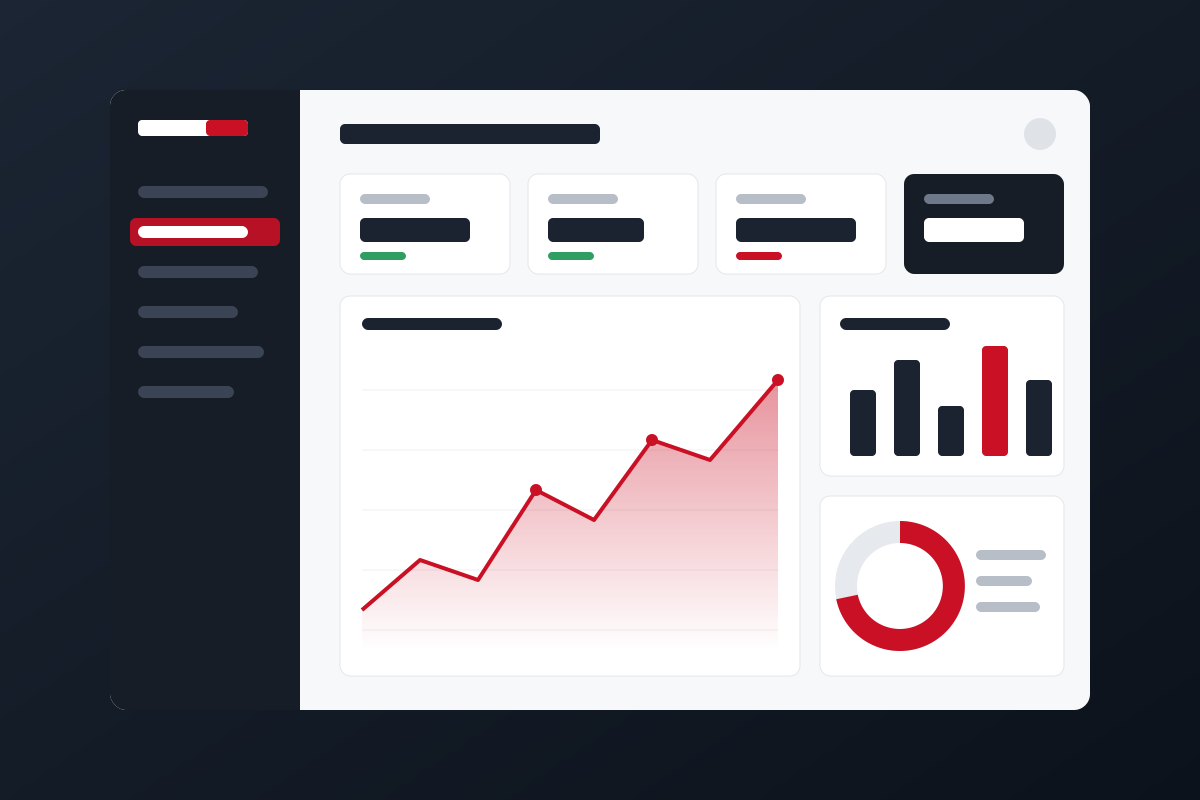
Manufacturing ERP Software: Bringing Every Part of Your Factory Together
Manufacturing is about much more than producing goods. It involves managing raw materials, planning production, maintaining quality, controlling costs, coordinating people, and delivering finished products on time. When these activities are handled through disconnected systems, spreadsheets, or manual processes, even a well-managed manufacturing business can face unnecessary delays and rising costs.
This is where manufacturing ERP software makes a real difference.
At CapsGlobal, we understand that manufacturers need more than software to record transactions. They need a system that helps them manage daily operations, make informed decisions, and maintain better control over the entire production cycle. Through our ERP brand, IncasERP, we aim to bring essential manufacturing processes together in one integrated platform.
What Is Manufacturing ERP Software?
Manufacturing ERP (Enterprise Resource Planning) software connects the different functions of a manufacturing business through a common system. Instead of managing inventory, production, purchasing, quality, and finance separately, businesses can coordinate these activities using shared information.
For example, when a new customer order arrives, the business needs to know whether the required raw materials are available, how much production capacity is needed, when manufacturing can begin, and whether the finished goods can be delivered on schedule.
Without an integrated system, answering these questions can take time and involve multiple departments. With a properly implemented manufacturing ERP, teams can work with more consistent information and coordinate their activities more effectively.
The goal is simple: fewer information gaps, better operational visibility, and more control over manufacturing processes.
Key Manufacturing ERP Modules in IncasERP
Every manufacturing business has its own way of working. A discrete manufacturer, a process manufacturing unit, and a business producing made-to-order goods may have very different operational requirements. A useful ERP system should support these differences while keeping core business processes connected.
IncasERP is positioned around the operational needs of manufacturing businesses. The following modules represent the key functional areas a comprehensive manufacturing ERP solution can address.
1. Production Planning and Control
Production planning is one of the most important parts of manufacturing. Businesses must balance customer demand, machine capacity, workforce availability, and material requirements to keep production running smoothly.
A production planning and control module helps businesses organise production schedules, manage work orders, track manufacturing progress, and monitor planned versus actual output.
With better visibility into production activities, teams can identify delays earlier, coordinate resources, and make more informed decisions about upcoming orders.
2. Inventory and Warehouse Management
Inventory problems can affect the entire production cycle. Excess stock ties up working capital, while shortages can delay manufacturing and customer deliveries.
An inventory and warehouse management module helps businesses monitor raw materials, work-in-progress items, and finished goods. It can support stock movement tracking, warehouse operations, material availability checks, and inventory control.
The objective is not simply to know how much stock is available. It is to understand what materials are needed, where they are located, and how inventory decisions affect production.
3. Bill of Materials (BOM) and Material Requirements Planning
A Bill of Materials defines the components and quantities required to manufacture a product. Material Requirements Planning (MRP) uses production demand and material information to help determine what needs to be purchased or produced and when.
These functions are particularly valuable for manufacturers handling multiple products, complex assemblies, or changing customer requirements.
By connecting product structures with production plans and inventory information, businesses can improve material planning and reduce avoidable purchasing or production delays.
4. Procurement and Purchase Management
Manufacturing depends on a reliable supply of raw materials, components, and other essential resources. Delayed purchases or poorly coordinated suppliers can disrupt production schedules.
A purchase management module supports purchasing activities such as purchase requisitions, purchase orders, supplier records, and purchase tracking.
When purchasing is connected to inventory and production planning, businesses can make procurement decisions based on actual requirements rather than relying entirely on manual estimates.
5. Quality Management
Product quality directly affects customer satisfaction, operational costs, and business reputation. For manufacturers, quality must be considered throughout the production process, not just when the finished product is ready for dispatch.
A quality management module can support inspection processes, quality checks, non-conformance recording, and corrective actions, depending on the system configuration.
Integrating quality activities with production and inventory helps businesses identify issues earlier and maintain more consistent manufacturing standards.
6. Sales and Order Management
Manufacturing operations need to stay aligned with customer demand. Sales teams must have a clear understanding of order commitments, while production teams need reliable information about what must be manufactured and when.
A sales and order management module helps manage customer orders, order status, delivery commitments, and coordination between sales, inventory, and production.
This connection can make it easier to respond to customer enquiries, plan workloads, and reduce communication gaps between departments.
7. Finance and Cost Management
Production decisions have a direct impact on profitability. Material costs, labour, machine utilisation, overheads, and wastage all contribute to the cost of manufacturing a product.
A finance and cost management module connects business transactions with financial reporting and helps management understand costs and financial performance.
When manufacturing and finance work with connected data, businesses can gain better visibility into expenses, operational performance, and the financial implications of production decisions.
8. Maintenance Management
Unexpected equipment breakdowns can interrupt production, delay orders, and increase maintenance expenses.
A maintenance management module can help businesses organise preventive maintenance, schedule servicing, record equipment issues, and track maintenance activities.
A more structured approach to equipment maintenance supports better planning and helps manufacturers reduce their dependence on reactive repairs.
9. Reporting and Business Intelligence
Business owners and production managers need timely information to make decisions. They should be able to assess production performance, inventory levels, order status, purchasing activity, and costs without spending hours consolidating reports.
Reporting and business intelligence capabilities help turn operational data into information that supports planning and performance monitoring.
Depending on the available configuration, dashboards and reports can help managers identify bottlenecks, monitor key performance indicators, and make decisions based on a clearer picture of business operations.
What Makes IncasERP Different?
Manufacturing ERP solutions are available in many forms, from basic inventory and accounting systems to large enterprise platforms. The challenge for manufacturers is finding a solution that fits their operations without making everyday work unnecessarily complicated.
At CapsGlobal, our approach with IncasERP focuses on the practical needs of manufacturing businesses and the importance of connecting their core processes.
A Manufacturing-Focused Approach
Manufacturing businesses have requirements that go beyond standard accounting, billing, or stock management. Production orders, material planning, work-in-progress, quality checks, and manufacturing costs need to work together.
IncasERP is intended to address these operational requirements through a manufacturing-oriented ERP approach, helping businesses move towards more connected workflows rather than managing every activity in isolation.
Connected Business Processes
The real value of ERP comes from the way its functions work together. Production planning depends on material availability. Purchasing depends on material requirements. Sales commitments influence production schedules. Financial information reflects the results of these activities.
An integrated ERP approach helps reduce the gaps between departments and gives teams a more consistent view of business operations.
Better Visibility for Decision-Making
When information is scattered across spreadsheets and separate applications, managers may struggle to get a complete picture of what is happening on the factory floor.
A connected ERP environment can make it easier to monitor operations, identify issues, and review performance using shared information. This supports more informed decisions at both operational and management levels.
A Practical Alternative to Disconnected Systems
Many manufacturers gradually adopt separate tools to solve individual problems. One system handles accounts, another manages inventory, and spreadsheets are used to plan production.
Although this approach may work initially, it can become difficult to maintain as the business grows.
An ERP platform provides an opportunity to bring these functions into a more coordinated environment. The aim is to simplify information flow, reduce duplication, and establish more consistent processes across the organisation.
A Solution That Should Fit the Business
No two manufacturing businesses operate in exactly the same way. Their products, production methods, reporting requirements, and approval processes can differ significantly.
At CapsGlobal, understanding these requirements is an important part of evaluating how IncasERP can support a business. The right ERP implementation should reflect actual operational needs rather than forcing every manufacturer into an identical workflow.
Note: Specific IncasERP configuration options, integrations, customisation capabilities, and implementation services should be confirmed against the current product offering before publication.
How Manufacturing ERP Helps Businesses in Day-to-Day Operations
The benefits of manufacturing ERP are often best understood through everyday situations.
Consider a manufacturer receiving several customer orders at once. The production team needs to plan capacity, the stores team must verify raw material availability, the purchasing team may need to order missing components, and the finance team needs visibility into costs.
If these departments work independently, small communication gaps can lead to larger operational problems.
With an integrated ERP system, the business can establish a more coordinated process for managing demand, materials, production, and financial information.
Over time, this can help manufacturers work towards:
- Improved coordination between production, stores, purchasing, sales, and finance.
- Better visibility into inventory and material requirements.
- More structured production planning and order tracking.
- Improved monitoring of quality and manufacturing costs.
- Reduced manual data entry and duplication where processes are integrated.
- More timely and consistent operational reporting.
The actual results depend on the quality of implementation, data accuracy, employee adoption, and how well the system matches the business's processes. ERP is not a replacement for sound operational practices; it is a tool that helps businesses apply those practices more consistently.
Who Can Benefit from Manufacturing ERP?
Manufacturing ERP can be useful for a wide range of businesses, including:
- Discrete manufacturers producing individual components, assemblies, or finished goods.
- Engineering and fabrication businesses managing material-intensive projects.
- Manufacturers working with complex bills of materials and multiple production stages.
- Businesses handling made-to-order or customised products.
- Growing manufacturing companies looking to replace disconnected spreadsheets and applications.
The suitability of IncasERP for a particular industry depends on its specific production workflows, compliance requirements, and the modules and configurations available for that business.
Why Choose CapsGlobal for Manufacturing ERP?
Selecting an ERP system is an important business decision. It affects how employees work, how information moves between departments, and how management monitors performance.
At CapsGlobal, our focus is on helping manufacturing businesses explore a more organised and integrated approach to managing their operations through IncasERP.
We believe the right ERP solution should address real business challenges. It should help teams access relevant information, establish consistent workflows, and understand how different activities affect one another.
Our approach centres on three important considerations:
Understanding business requirements: Manufacturing processes should be evaluated before deciding how an ERP system needs to be configured.
Connecting operational functions: Production, inventory, purchasing, sales, quality, and finance should work as parts of a coordinated business process wherever the solution supports these integrations.
Supporting long-term operational improvement: ERP should be viewed as an investment in better process management and decision-making, not simply as a software installation.
For manufacturers evaluating ERP options, these considerations are just as important as the software's feature list.
Final Thoughts
Manufacturing success depends on how well a business manages the relationship between materials, people, machines, orders, quality, and costs. When these elements are coordinated effectively, manufacturers are better positioned to respond to changing demand and manage daily operations with greater confidence.
Manufacturing ERP provides the foundation for that coordination by bringing important business functions into a connected system.
Through IncasERP, CapsGlobal aims to help manufacturing businesses explore a more structured, integrated way of working. Whether the priority is production planning, inventory control, procurement, quality, or operational reporting, the first step is understanding where the business faces challenges and identifying how ERP can address them.
Looking for a manufacturing ERP solution for your business?
Connect with CapsGlobal to discuss your manufacturing requirements and explore how IncasERP may fit your operational needs.
CapsGlobal — Manufacturing ERP with a focus on connected operations and better business visibility.
Suggested SEO title: Manufacturing ERP Software: Modules, Benefits and IncasERP by CapsGlobal
Suggested meta description: Explore manufacturing ERP software, its key modules and business benefits. Discover how CapsGlobal's IncasERP aims to connect production, inventory, procurement, quality and finance.
Suggested URL slug: /manufacturing-erp-software
Primary SEO keyword: Manufacturing ERP Software
Related keywords: Manufacturing ERP System, ERP for Manufacturing Industry, Production Planning Software, Manufacturing Inventory Management, IncasERP, CapsGlobal Manufacturing ERP